

Amphitheatre
Roman


Description
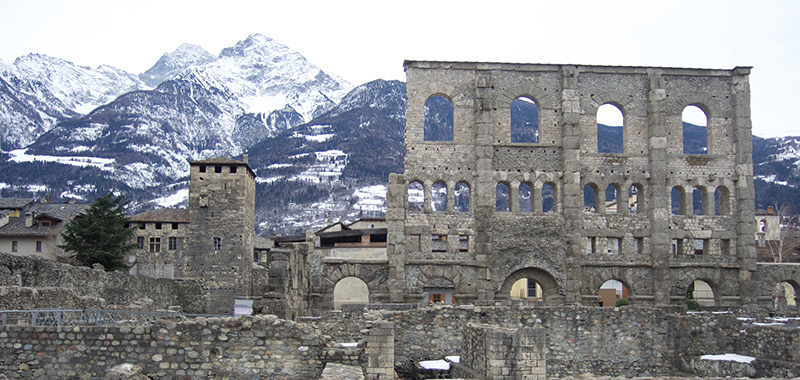
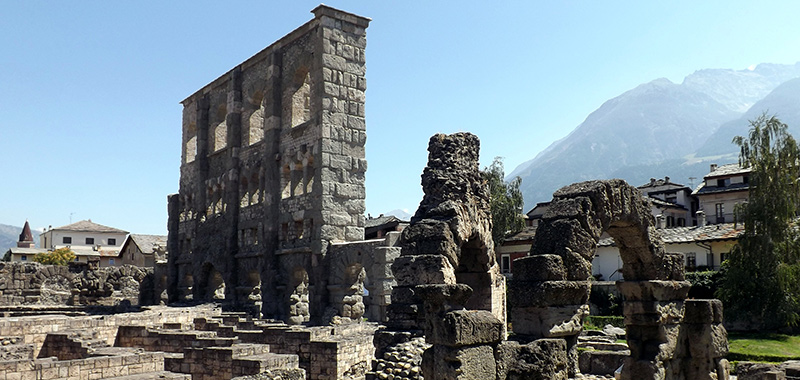
Symbol of the city of Aosta, the Roman amphitheater was built during the time of Emperor Claudius, a few decades after the foundation of Augusta Prætoria Salassorum. Considered a masterpiece of late Roman provincial architecture, the area where its remains now stand, along with the ruins of part of the forum, is the result of a series of excavations that began in 1864. These excavations revealed the cavea, the orchestra, the stage wall, and, most notably, the southern facade, which stands 22 meters high with buttresses and arcades lightened by three tiers of windows.
Several scholars have estimated that inside the amphitheater, which is believed to have been covered, between 3,000 and 4,000 people could attend, occupying an area 81 meters wide and 64 meters long.
Today, the visible and visitable ruins are those previously mentioned because, during the Middle Ages, many buildings were dismantled to use the stones to construct the main churches and palaces of the city. The preservation of the southern facade of the theater is due to the fact that adjacent to it stood a medieval civilian construction, which simply used the Roman building as support.
In the same area, in addition to the ruins of the Roman masterpiece, remains of some houses, a portico, and a road dating back to a period between the 3rd and 2nd centuries BC are found. During the summer season, periodic concerts or performances are held there.
Location of the monument
Book on our website
Visit this important monument by staying at Inn Aosta flats. 3 reasons to book now from our website:
Best rate
Direct relationship
Special offers
our Apartments
Visit this important monument of the city of Aosta by staying in comfortable and practical tourist flats…
Immediate request
Write to our reception